Mattress Construction · A Buying Guide
What to Know About Vispring Innerspring Mattress Construction
A mattress is more than a firmness label or a beautifully dressed bed. Inside an innerspring model, the arrangement of springs, comfort layers and upholstery determines how the surface responds, where it supports, and how it may feel over years of nightly use. Vispring offers a useful reference point for considering these details—not as a single formula, but as a reminder to look closely at how a mattress is built.
Published October 14, 2026
The architecture beneath the bedding
An innerspring mattress has a spring system at its core, with layers above and around it that shape the feel of the bed. That description sounds simple, but the experience can vary considerably. Spring type, coil count and configuration, upholstery materials, quilting, and the way the mattress is assembled all influence how it behaves when you lie down.
Think of the mattress as a small piece of architecture. The spring unit is its structural framework; the comfort layers are the finish that moderates pressure and touch. Neither component tells the whole story on its own. A responsive spring system may feel buoyant or firm, but a generous, yielding top layer can soften that first impression. Conversely, a relatively plush surface can sit over a supportive core that limits how deeply the sleeper settles.
Vispring is often associated with traditional, carefully layered spring mattresses. Its name can serve as a point of reference when learning the vocabulary of mattress construction, but shoppers should still evaluate the specifications of the particular model they are considering. Product ranges and materials differ, and a brand name alone cannot predict whether a mattress will suit a given body, sleeping position or preference.
What the spring system does
The spring unit provides much of a mattress’s underlying support and contributes to its characteristic response. When weight is applied, the springs compress and push back. How that movement is distributed depends on the design: the shape and gauge of the springs, their arrangement, the number of zones or sections, and how the system is connected or allowed to move independently.
Some innerspring mattresses use interconnected coils, which can respond as a more unified structure. Others use pocketed springs, each enclosed in a fabric sleeve, allowing individual coils to move with less direct transfer to their neighbours. These are broad descriptions rather than guarantees of feel. An interconnected unit is not automatically too firm, and pocketed coils are not automatically ideal for every sleeper. The layers above the springs, along with the mattress’s total construction, remain decisive.
Coil count is one of the most visible numbers in a mattress specification, but it should not become the only number that matters. Counts can be presented for different mattress sizes or spring units, making comparisons difficult unless the figures are measured on the same basis. Coil design, material, placement and the quality of the surrounding layers can be more revealing than a headline count. Ask what the figure refers to and whether the construction is described in enough detail to make a meaningful comparison.
Support is also not synonymous with hardness. A well-matched mattress aims to keep the body comfortably supported while allowing enough give at pressure points. What feels supportive depends partly on body shape and weight distribution, which is why the same mattress can feel quite different to two people.
Comfort layers: the first impression and the lasting feel
Above the spring unit sit the materials that soften, cushion or refine the sleeping surface. Depending on the model, these may include natural or synthetic fibres, foam, wool, cotton, latex or other upholstery materials. They can affect pressure relief, temperature perception, surface resilience and how quickly the mattress responds when a sleeper changes position.
The initial sensation is only part of the story. A mattress may feel inviting in the first few minutes but become uncomfortable after a longer trial if it allows too much sinking or creates pressure at the shoulders or hips. Another may seem firmer at first yet provide a more comfortable, stable surface once the body has settled. This is why a short sit on the edge is not a reliable test. If possible, lie in your usual position for several minutes and notice the points where your body meets the mattress.
Upholstery layers can also alter how clearly the springs are felt. A closely tailored, relatively restrained surface may allow more of the spring unit’s buoyancy to come through. A thicker comfort package may create a more cushioned sensation, although the effect depends on its composition and construction. The aim is not to choose the thickest or most elaborate top, but to understand how it works with the support system beneath it.
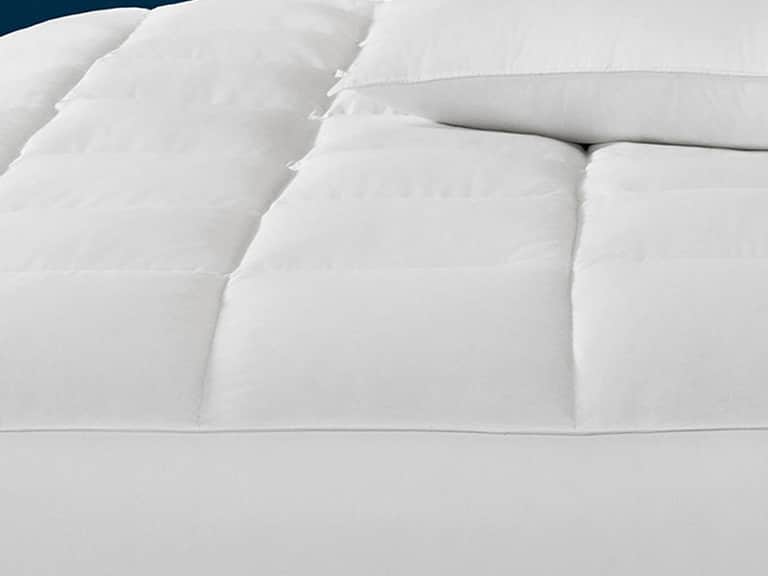
In a complete sleep setup, a mattress pad or topper can change the surface feel, though it cannot replace a mattress whose core support is unsuitable. For instance, the Monmouth Mattress Pad adds an airy layer of cushioning with European white goose down and a cotton batiste shell. It is an accessory placed over the mattress, not part of an innerspring construction, so it should be considered a finishing layer rather than a way to correct a fundamentally poor fit.
Why “firm” is not a complete specification
Firmness labels are useful shorthand, but they are not a universal measurement. One maker’s medium may feel closer to another maker’s firm, and individual perception changes with body weight, proportions and sleep posture. A soft comfort layer over a supportive spring unit may also be described differently from a tightly upholstered mattress with a similar overall level of support.
Instead of relying on a single label, look for the relationship between the upper layers and the spring system. Ask whether the mattress offers a more yielding surface, a lively and responsive feel, or a closer, more cushioned sensation. Consider how much you want to sink into the bed, how easily you want to turn, and whether you share the mattress with someone whose preferences differ from yours.
Side sleepers often benefit from a surface that accommodates the shoulders and hips without allowing the spine to fall out of a comfortable line. Back sleepers commonly look for a balanced feel that supports the torso while avoiding excessive pressure in the lower back. Stomach sleepers may prefer a surface that limits deep sinking around the middle. These are starting points, not rules: body shape, personal comfort and any advice from a health professional should inform individual decisions.
For couples, movement response may matter as much as firmness. A spring design that reduces the spread of movement can make it easier for one person to shift position without disturbing the other, but the result depends on the entire mattress. A partner trial can be particularly helpful, especially when the two sleepers have substantially different weights or preferred sleep positions.
Reading a mattress specification with a discerning eye
Specifications are most useful when they explain the construction in plain language. Before comparing models, gather details about the spring type, comfort materials, cover and care requirements. If a description uses phrases such as “layered comfort” or “advanced support” without naming the materials or explaining their placement, ask for clarification.
- Spring design: Find out whether the mattress uses pocketed, interconnected or another spring configuration, and how the system is intended to respond.
- Comfort materials: Check which fibres or foams are used, where they sit in the mattress and how they contribute to cushioning or temperature management.
- Construction details: Look for information about quilting, edge treatment, internal layers and whether the mattress is designed to be turned or rotated.
- Dimensions and compatibility: Confirm the mattress size, depth and foundation requirements. A suitable base helps the mattress sit evenly and perform as intended.
- Care and warranty: Review care instructions and warranty terms before purchase. These vary by model and should be checked directly rather than assumed from a brand or category.
Vispring mattress construction should therefore be considered model by model. If a particular specification lists natural fibres, a distinctive spring system or a specific upholstery method, evaluate those details as part of that mattress’s design rather than assuming every product in the range shares them. The most useful comparison is between complete constructions, not between broad brand reputations.
Durability is a matter of materials and care
Durability is shaped by more than the spring unit. The resilience of the springs, the density and character of comfort materials, the quality of assembly, the foundation underneath and the way the mattress is used all play a part. A mattress that is consistently supported on a suitable base is less likely to experience avoidable strain than one placed on an unsuitable or uneven foundation.
It is sensible to ask whether a mattress should be rotated, turned or kept in one orientation. Do not assume that all innerspring mattresses require the same routine: construction varies, and following the maker’s instructions is the best approach. A protective cover can help guard against everyday spills and dust, while keeping bedding clean contributes to a more pleasant sleep environment. Such accessories can protect or modify the surface, but they do not halt normal material wear.
Visible impressions can emerge as materials settle with use. The warranty documentation explains what the manufacturer considers a covered defect and what conditions apply. Read the terms carefully, including any requirements for a particular foundation, proof of purchase or maintenance. These practical details are less glamorous than a fabric swatch, but they are essential parts of a considered purchase.
The in-store or at-home trial
A thoughtful test begins with your own routine. Wear comfortable clothing, remove bulky outer layers and lie down in the position you usually adopt. Give each mattress time; avoid judging solely by the first few seconds. Pay attention to whether your shoulders or hips feel compressed, whether your lower back feels unsupported, and whether changing sides requires effort.
If you share a bed, test it together. Notice whether movement travels across the surface and whether each person can settle without feeling pulled toward the other. Edge comfort may matter if you sit on the side of the bed to dress or use much of the mattress’s perimeter. A mattress’s edge construction can influence that experience, though it should be assessed alongside the sleeping surface rather than treated as a separate guarantee of quality.
When a home trial is available, understand its exact terms before ordering. Check the trial period, return or exchange conditions, delivery arrangements, and whether the mattress must be used with a specified foundation. A generous-sounding trial can have practical requirements, and clarity in advance makes the experience more straightforward.
A considered comparison checklist
For a useful comparison, write down the details that affect your sleep instead of collecting marketing phrases. A small shortlist can make different innerspring mattresses easier to assess:
- Does the surface feel comfortable in your regular sleeping position?
- Does the mattress support you without creating obvious pressure or excessive sinking?
- Can you turn and reposition without feeling caught in the comfort layers?
- Do the spring and upholstery details make sense for your preferences?
- Is there enough information about materials, care and the required foundation?
- Have you checked the size, depth, trial terms and warranty for the specific model?
When comparing a Vispring mattress with another innerspring option, resist the temptation to reduce the decision to price, coil count or a single firmness word. Compare the complete construction and your experience on the bed. If two models feel similar in a showroom, their materials, care requirements and long-term terms may help distinguish them. If one feels more comfortable, identify why: pressure relief, ease of movement, surface temperature or a more stable sense of support.
The quiet luxury of a mattress that suits you
Innerspring construction is a meeting of engineering and touch. The springs lend structure and response; the layers above them determine how that structure is experienced. The design can be traditional or contemporary, simply tailored or richly upholstered, but its success is personal. A handsome specification matters only when it translates into a comfortable, dependable place to rest.
Vispring can be a helpful reference as you learn how spring systems and comfort materials work together, but the best mattress is not selected by reputation alone. Look beyond the label, ask for clear construction details, and assess the bed in the context of your own body and habits. Firmness is a starting point, not a verdict; coil count is a clue, not a conclusion.
With that perspective, choosing an innerspring mattress becomes less about decoding grand claims and more about finding a thoughtful balance: support that feels steady, cushioning that suits your pressure points, and materials whose care and construction you understand. That balance is the true foundation of a bed made for nightly life—not merely a beautiful room, but a more considered place to begin and end the day.